
There are many reasons why we humans have become disconnected from our environment and our food. Mass food production, clever advertising combined with busy lives, decreasing support networks…it’s easy to understand why we choose readily available, cheap and convenient over pricey and time-consuming.
Unfortunately, this shift to the modern, more processed food diet from the more natural, home cooked diet that our great-grandparents ate, has meant that many of us are not tuned into our natural intuition when it comes to what foods benefit our bodies. We tend to eat simply to stop feeling hungry or to satisfy cravings, not appreciating that better quality foods will help us thrive.
According to the Nutritional Therapy Association, by reconnecting with our innate wisdom and finding the diet that is just right for our bio-individual needs, we can rebalance our bodies and reduce those impulses which crave foods or substances that harm us rather than nourish us.
However, a lot of people make the assumption that “healthy = expensive” and we often use price to judge the quality of something in the absence of other information. If this is you, then two things might be happening: (a) if you are already trying to manage a food budget and feel good about the healthiness of you/your family, you might be paying too much for your food, OR (b) you might be deterred from making healthy choices in the first place because you assume you cannot afford it.
What’s the solution? Change your mindset!
Eating healthy, great-tasting, properly prepared food need not be a drain on your wallet or a Herculean task. Set your sights small in the beginning, recognise that this is a journey and focusing on one step at a time is perfectly sensible.
So if you’re on a budget, here are 6 tips to get you started on that path while keeping it affordable:

1. Buy your organic products from budget supermarkets
Recognising the growing popularity of organic and sustainable food options, many budget supermarkets now stock a huge range of own-brand organic and locally sourced food. This is a particularly good option for buying organic products which can otherwise be quite expensive like meat and eggs.
Look out for local farmers’ markets too where you can buy organic produce straight from the farmer and chat to them to find out more about how they produce their food.
2. Buy seasonal produce
Find out which fruit and vegetables are in season and buy organic varieties if possible. They are often cheaper when in season because they are most abundant at that time. Also, food which is in season is more likely to have been grown locally which makes it better for the environment AND it tends to be more nutrient dense because it has been harvested at just the right time in its peak season when it has matured properly. Cheap, local and more nutritious – triple the benefit!
3. Prioritise your food
It is not essential to buy everything organic. Choose what suits you best. For example, decide that you will prioritise your daily staples, e.g. bread, dairy, eggs, coffee, onions, bananas etc and try and buy organic varieties of these as much as possible. This way, at least the foods you consume the most are the best quality.
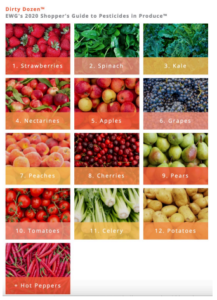
Or, you can aim to buy organic versions of the “Dirty Dozen”, i.e. the 12 specific fruit and vegetables which tend to have the most pesticide residues, and for everything else buy cheaper, non-organic versions. You can find the “Dirty Dozen” listed on the Environmental Working Group Website – click here.
4. Soak, sprout, ferment!
Did you know that there are different techniques to preparing food that can boost the amount of nutrients that your body absorbs? We often focus on what we’re eating, when actually how we are preparing our food can also be a vital contribution to our health and wellbeing. So if you can’t spare too much money, but can devote a little time, you can create highly nutritious foods yourself at home.
For example, dried beans and pulses are very economical and soaking them yourself before cooking them enables our bodies to absorb even more of their vital vitamins and minerals. The same goes for sprouting grains, nuts and pulses which can make them more digestible and therefore beneficial for our body.
If you eat a lot of bread, why not make a sourdough starter and bake your own? If yoghurt and cheese feature regularly in your life, experiment with making them from scratch. Maybe you can’t eat a sandwich without pickles, you love kefir on your granola, or a strawberry kombucha vodka cocktail is the highlight of your Friday night! Taking the time to learn how to make your favourites yourself not only feeds your passion, but helps you to awaken your instincts when it comes to what makes you feel good.

5. Focus on one meal at a time
Do you have a favourite meal? Maybe it’s a family favourite or a traditional meal from your childhood? If you are not able to cook frequently, why not choose one meal each week that you can devote time to recreating from scratch with the best quality ingredients you can afford? Perhaps it will take a bit of research to find out the traditional techniques of preparing it or maybe you decide to give it a modern twist and switch some ingredients. Treat this meal as an experience rather than simply a way to fuel up.
Making a weekly meal plan can help you plan your time and budget your food shopping so you only buy what you need. It need not be detailed or complicated, even if all you have time to do is a hand scrawled list on a Sunday, that’s a start!
6. Rethink your cookware and storage
You might be wondering how relevant this is, however, if you’re worried about toxins in food affecting your health, then you should equally worry about the potential toxins in your cookware and storage containers. Adapt your kitchen slowly over time to spread the cost and you will be glad that you did because with the right tools, home cooking can be more efficient and healthy.
First, invest in a good quality knife and wooden chopping to make cutting and chopping safer and easier.
Next, as and when you finish your current rolls of plastic wrap and foil, choose instead beeswax wraps in place of plastic wrap and unbleached parchment wrap in place of foil. These natural alternatives will not contaminate your food.
Then, do you have a birthday coming up? Or is it nearly Christmas? Perhaps you can find a good reason to invest in one quality cast iron frying pan. Cast iron is just as non-stick as teflon, but without the toxic chemicals and, if looked after correctly, will last a lifetime.